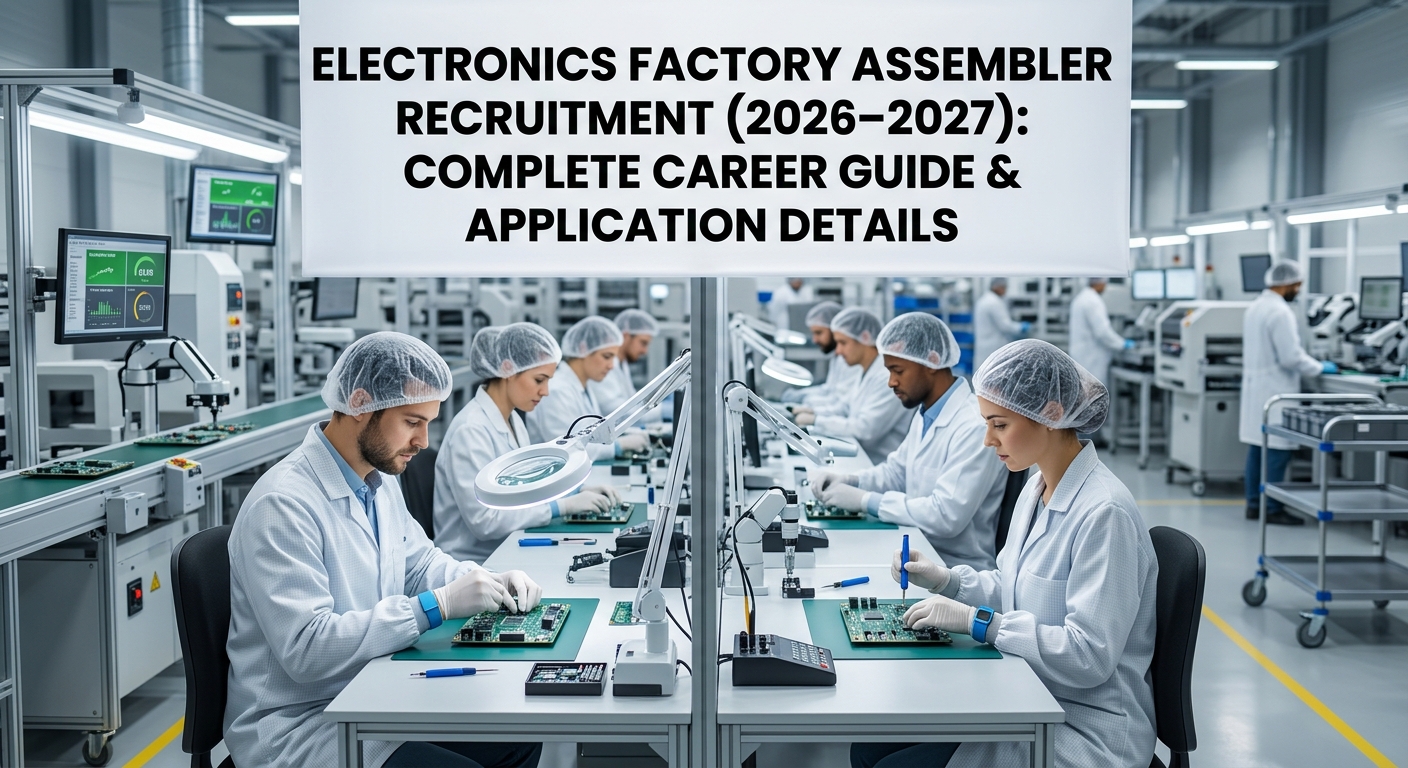
The global electronics and technology manufacturing sector is expanding rapidly, creating a strong demand for Electronics Factory Assemblers for the 2026–2027 hiring cycle. Whether you are seeking an entry-level position in high-tech manufacturing or looking to build a long-term career as a skilled assembly technician, factory roles offer stable employment, competitive wages, and clear pathways for career growth.
This comprehensive guide breaks down the core duties of an electronics assembler, essential qualifications, compensation perks, and step-by-step instructions on submitting your application.
What Does an Electronics Factory Assembler Do?
An Electronics Assembler is responsible for building, wiring, inspecting, and packaging various electronic products and sub-assemblies. These range from daily consumer tech (smartphones, appliances) to specialized medical devices, industrial automation units, and automotive electronics.
Key Roles & Responsibilities
- Interpreting Blueprints & Schematics: Read work instructions, technical drawings, and wiring diagrams to position electronic parts accurately.
- Component Mounting & Soldering: Secure capacitors, microchips, resistors, and wire harnesses onto printed circuit boards (PCBs) using fine hand tools or automated soldering stations.
- Testing & Quality Assurance: Perform visual inspections and use digital multimeters to catch defects, shorts, or wiring flaws before final packaging.
- Machine Operation & Tooling: Safely operate automated pick-and-place equipment, wire strippers, crimpers, and bench tools.
- Packaging & Documentation: Log daily output, record serial numbers in tracking systems, and pack finished assemblies for shipment.
Candidate Qualifications & Requirements (2026–2027)
Most facilities offer structured on-the-job training for freshers, while higher-tier technical roles favor prior experience or diplomas:
| Qualification Category | Requirement Details |
| Education | High School Diploma, Matriculation, or equivalent technical trade certificate (DAE in Electronics or Electrical Engineering is preferred). |
| Physical Demands | Strong fine motor skills, hand-eye coordination, accurate color vision (for wire color coding), and the ability to work sitting or standing for long shifts. |
| Technical Knowledge | Familiarity with basic electrical tools, ESD (Electrostatic Discharge) protective protocols, and component safety standards. |
| Essential Soft Skills | High attention to detail, team collaboration, reliability, and basic analytical problem-solving skills. |
Why Work in Electronics Manufacturing?
- High Industry Stability: Modern tech integration across automotive, consumer, and industrial sectors ensures continuous job openings worldwide.
- Clear Career Growth: Entry-level assemblers frequently move up to Quality Control (QC) Inspector, Production Lead, Maintenance Technician, or Operations Supervisor roles.
- Practical Skill Building: Acquire hands-on experience in modern surface-mount technology (SMT), precision micro-soldering, and industrial automation.
Step-by-Step Application Guide
- Update Your Resume: Highlight fine motor abilities, experience with tools, past manufacturing roles, and any technical safety certifications.
- Organize Documents: Keep valid identification, educational certificates, and trade diplomas ready for verification.
- Submit Online: Fill out the online application before the batch recruitment deadline.