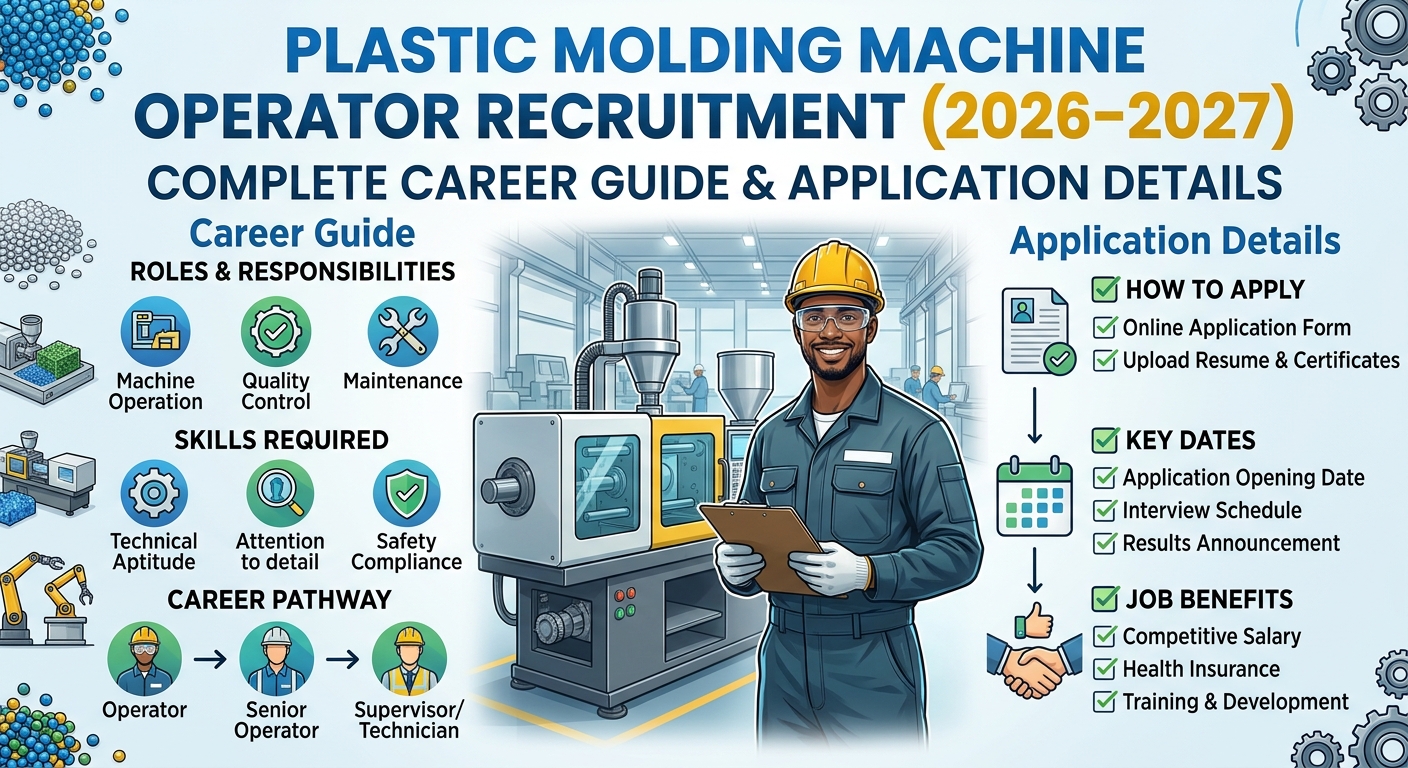
The modern industrial and plastics manufacturing sector is expanding rapidly through 2026 and 2027. Driven by advancements in smart factory systems, automated robotic pickers, and sustainable polymer processing, the demand for skilled Plastic Molding Machine Operators is reaching an all-time high across global supply chains.
Today’s operators act as essential process specialists who manage high-tech injection molding, thermoforming, blow molding, and extrusion machinery. If you are looking for a high-demand industrial career with competitive pay, job security, and clear pathways for technical advancement, this guide covers everything you need to know about current job openings, requirements, and application steps.
Role & Core Responsibilities
A Plastic Molding Machine Operator configures, operates, and monitors precision machinery used to transform raw plastic polymers into components for medical devices, automotive parts, consumer packaging, and electronics.
- Machine Setup & Production: Load raw polymer pellets, adjust temperature, pressure, and cycle timing parameters, and initiate production runs.
- Quality Control & Inspection: Inspect molded components for structural integrity, warping, or surface defects using micrometers, calipers, and automated vision systems.
- Process Troubleshooting: Identify operational issues (such as incomplete fills or air bubbles) and adjust machine parameters to ensure smooth, efficient output.
- Routine Maintenance: Perform basic preventive maintenance, including mold cleaning, component lubrication, and replacing worn seals or fittings.
- Safety Protocols: Maintain compliance with plant safety guidelines, Lockout/Tagout (LOTO) rules, and ISO quality standards.
Technical Skills & Requirements (2026–2027)
Employers look for candidates who combine mechanical aptitude with basic digital literacy:
| Skill Category | Specific Competencies |
| Technical Knowledge | Familiarity with injection molding, blow molding, thermoforming, or extrusion processes. |
| Automation & PLC | Experience operating HMI touchscreens, monitoring robotic arm pickers, and reading digital diagnostics. |
| Material Handling | Understanding standard thermoplastics, recycled polymers, and bio-based resins. |
| Quality Inspection | Capability to read precision gauges, measure part tolerances, and log production metrics. |
| Soft Skills | Strong attention to detail, problem-solving skills under tight schedules, and teamwork. |
Salary Outlook & Career Progression
Due to high demand for skilled technicians in modern manufacturing hubs, compensation packages for molding machine operators remain highly competitive:
- Entry-Level Operators: $38,000 – $46,000 / year (or equivalent regional hourly rates)
- Experienced Adjusters / Technicians: $48,000 – $68,000 / year
- Lead Operators & Shift Supervisors: $70,000 – $85,000+ / year
Career Pathway
Starting in an entry-level operator role offers a direct track into advanced technical and management roles:
$$\text{Machine Operator (Entry)} \longrightarrow \text{Mold Setup Technician} \longrightarrow \text{Process / Automation Specialist} \longrightarrow \text{Production Supervisor}$$
Educational Requirements
- High School Diploma / Matriculation: Baseline educational requirement for entry-level factory positions.
- Vocational Certificate / Diploma: A technical diploma (DAE in Mechanical, Electrical, or Plastics Technology) gives candidates a strong competitive edge.
- On-the-Job Training: Most industrial facilities provide full paid safety and machinery orientation for freshers.
How to Apply Online
To apply for current openings across regional plastics manufacturing plants and industrial zones:
- Prepare Your Resume: Include details regarding machine operation, mechanical skills, safety certifications, or previous factory experience.
- Gather Required Papers: Keep valid identification, trade certificates, and educational documents ready for verification.
- Submit Application: Complete your submission through the official portal before the recruitment batch deadline.