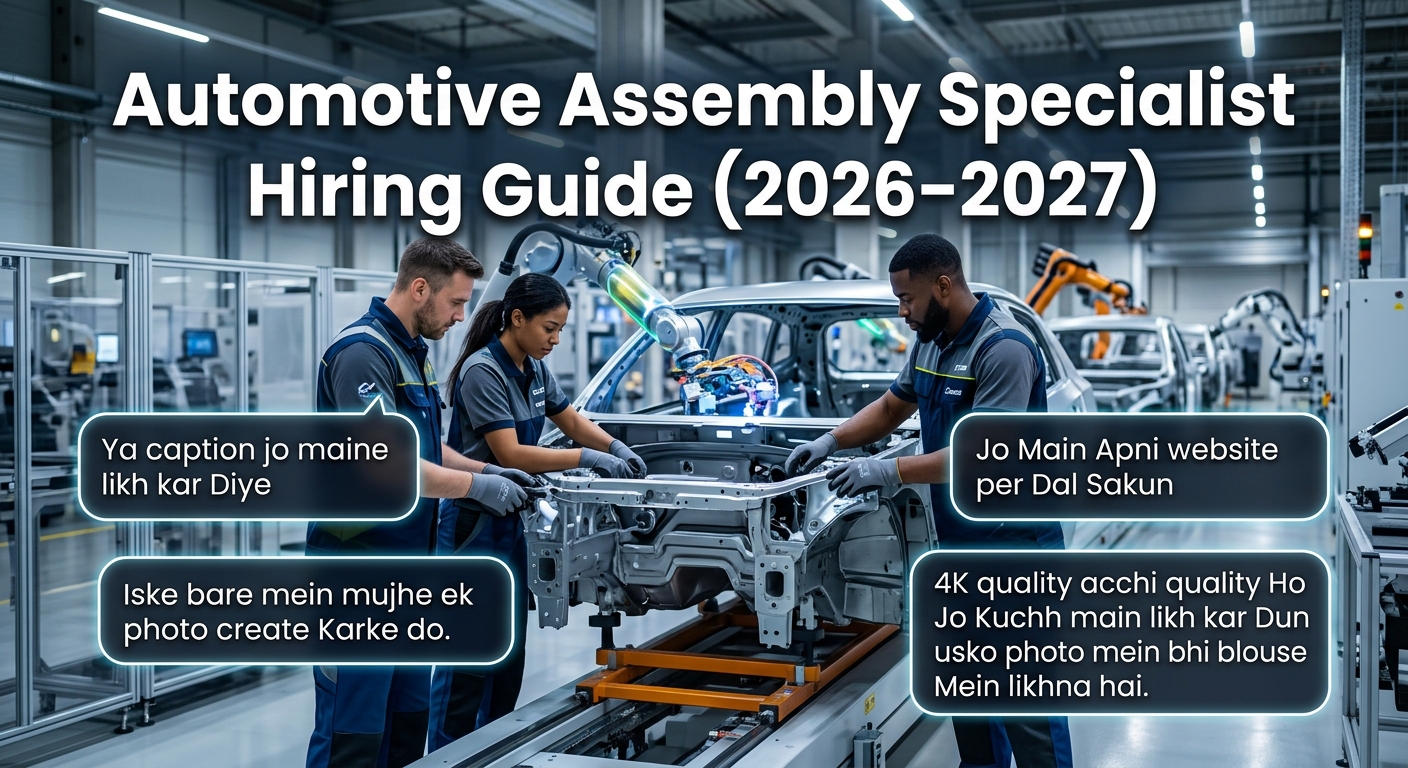
The automotive manufacturing industry is currently experiencing a massive transformation. Driven by the fast-paced growth of Electric Vehicles (EVs), modern hybrid engines, and Intelligent Driver-Assistance Systems (ADAS), the demand for qualified Automotive Assembly Specialists is reaching unprecedented levels for 2026 and 2027.
Whether you are aiming to land an entry-level position on a production line or advance your career in tech-driven automated plants, this detailed guide outlines job duties, essential skills, wage expectations, and application steps.
What Does an Automotive Assembly Specialist Do?
An Automotive Assembly Specialist is responsible for combining individual components, sub-assemblies, and intricate electrical or mechanical systems into finished vehicles. Working in dynamic production environments, these professionals ensure that every element—from high-voltage EV battery cells to interior cabin details—aligns perfectly with strict engineering and safety standards.
Key Work Responsibilities
- Line Assembly Execution: Follow technical schematics, digital work instructions, and engineering blueprints to fit mechanical, hydraulic, and electrical parts.
- Precision Equipment Usage: Operate specialized air tools, calibrated torque wrenches, automatic riveters, and digital measurement devices.
- Quality Assurance & Testing: Perform thorough visual inspections, dimensional measurements, and automated checks to detect and resolve defects early.
- Smart Automation Collaboration: Work efficiently alongside industrial collaborative robots (cobots) and Automated Guided Vehicles (AGVs).
- Safety Protocol Compliance: Adhere strictly to workplace safety standards, utilize protective gear (PPE), and maintain an organized, hazard-free workstation.
Essential Qualifications & Desirable Skills
Modern manufacturing facilities favor candidates who display technical capability, meticulous attention to detail, and readiness to adapt to smart factory systems.
Education & Credentials
- Base Requirement: High school diploma, GED certificate, or equivalent vocational training.
- Advantageous Certifications: OSHA Safety Certification, Certified Manufacturing Associate (CMfgA), or technical diplomas in mechatronics/automotive assembly.
Technical & Soft Skillsets
- Physical Stamina & Dexterity: Excellent hand-eye coordination and physical endurance required for active shift work.
- Technical Blueprint Literacy: Ability to accurately interpret schematic drawings, wiring layouts, and digital work orders.
- Tool & Instrument Mastery: Hands-on experience with pneumatic machinery, calipers, digital gauge tools, and power equipment.
- Team Communication: Strong communication skills and flexibility to thrive in multi-shift team environments.
Salary Insights & Career Progression (2026–2027)
| Experience Level / Role | Estimated Hourly Rate | Average Annual Pay |
| Entry-Level Assembler | $18.50 – $22.00 / hr | $38,500 – $45,700 |
| Experienced Technician | $22.50 – $28.00 / hr | $46,800 – $58,200 |
| Lead Specialist / QA Auditor | $28.50 – $35.00+ / hr | $59,000 – $72,800+ |
> Note: Actual compensation depends on geographic location, union representation, and specific technical focus (such as EV high-voltage system assembly).
Career Growth Opportunities
Starting as a component assembler builds a strong foundation for several higher-paying career paths:
- Quality Control Inspector: Focus on precision measurement, defect prevention, and compliance auditing.
- Robotics & Automation Technician: Supervise, calibrate, and troubleshoot automated assembly systems and cobots.
- Production Supervisor: Lead plant operations, oversee shift workflows, and drive safety and output standards.
Work Environment & Work-Life Details
Automotive plants generally operate continuous shifts to meet production targets. Key aspects of the work environment include:
- Shift Structures: Standard day, afternoon, night, or 4-on/4-off rotating rotations.
- Facility Conditions: Clean, climate-controlled, modern smart-factory settings equipped with ergonomic lifting systems and noise management.
- Standard Employee Benefits: Full-time roles commonly include comprehensive health coverage, paid leave (PTO), retirement plans, and overtime pay incentives.
How to Apply for Open Roles