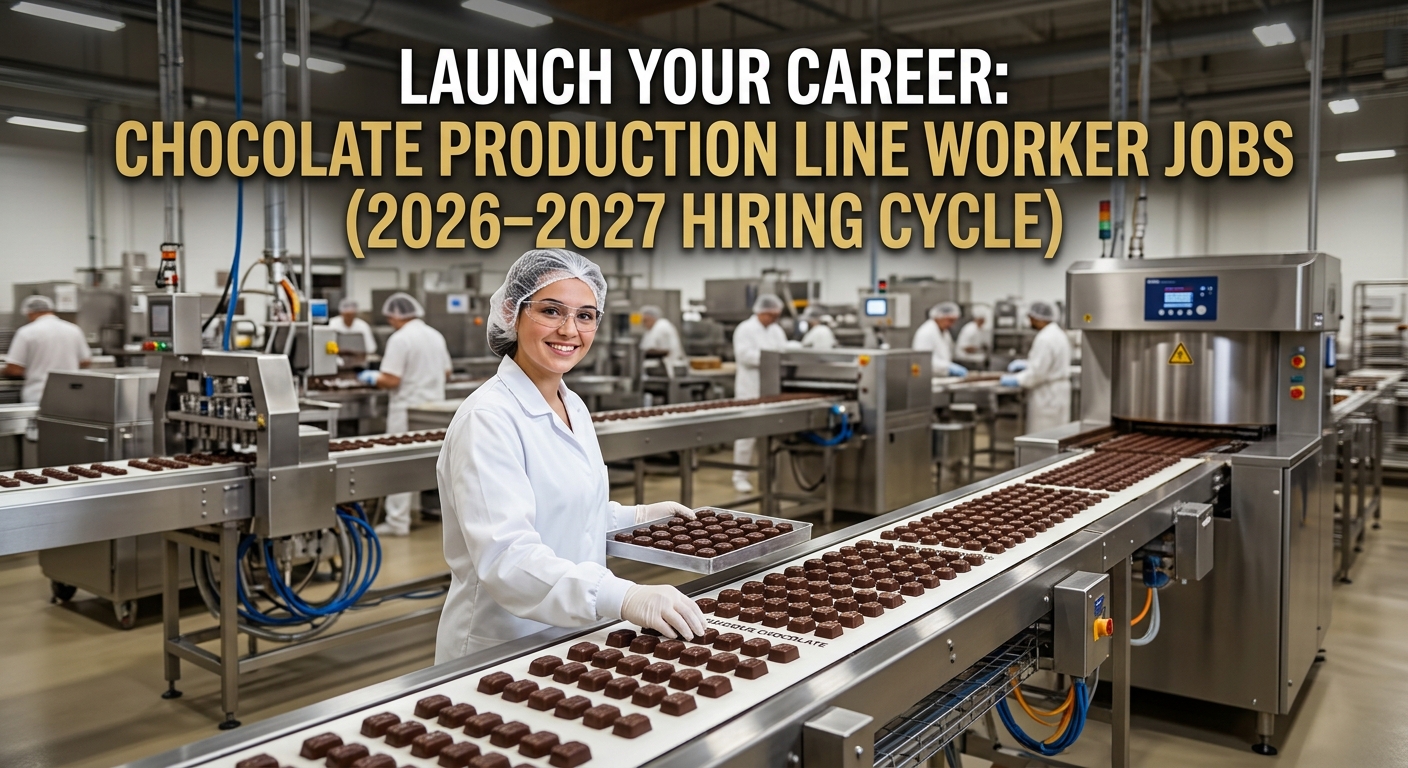
The worldwide confectionery sector continues to expand rapidly, generating thousands of stable employment openings across the globe. For individuals searching for dependable work with reliable hours, competitive pay, and a solid entry point into industrial food manufacturing, stepping into a Chocolate Production Line Worker role is an exceptional choice.
As major food plants ramp up their manufacturing schedules for the 2026–2027 hiring period, factories are actively looking for motivated candidates to join their production, safety, and packaging teams.
What Does a Chocolate Production Line Worker Do?
A Chocolate Production Line Worker plays a vital role on the factory floor, ensuring that raw ingredients are seamlessly transformed into delicious, high-quality confectionery items while adhering to rigorous food safety protocols.
- Machinery Operation: Overseeing automated production systems, including chocolate tempering units, molding machines, filling stations, and wrapping equipment.
- Material Preparation: Safely measuring and feeding raw elements—such as cocoa mass, sugar, dairy powders, and flavor inclusions—into industrial mixing vats.
- Sorting and Packaging: Carefully placing finished chocolate products into protective trays, display boxes, or shipping cartons for distribution.
- Quality Control: Visually inspecting items for defects in shape, texture, color, or packaging integrity before they head to the loading dock.
- Sanitation and Cleanliness: Strictly following Good Manufacturing Practices (GMP) and Hazard Analysis Critical Control Point (HACCP) standards by sanitizing tools and workstations throughout the shift.
Qualifications and Requirements for 2026–2027
Entry-level roles in chocolate manufacturing generally do not require a college degree, making this an accessible career path. Ideal candidates typically possess:
- Educational Background: A high school diploma, GED, or an equivalent qualification.
- Physical Endurance: The ability to remain on your feet for long periods (covering 8 to 12-hour shifts), perform repetitive motions, and lift boxes ranging from 20 to 50 lbs (9 to 23 kg).
- Sharp Observation Skills: Quick attention to detail to spot equipment errors or defective products instantly, minimizing line downtime.
- Commitment to Food Safety: A strong grasp of personal hygiene rules, sanitation protocols, and protective gear guidelines (such as hairnets, beard nets, gloves, and slip-resistant shoes).
- Reliability and Teamwork: Excellent communication skills, punctuality, and the ability to cooperate smoothly with shift managers and line teammates.
Why Choose a Career in Chocolate Manufacturing?
- Clear Advancement Pathways: Dedicated workers frequently get promoted into specialized positions such as Machine Operators, Line Leads, Quality Assurance Inspectors, or Shift Supervisors.
- Attractive Pay Structures: Entry-level jobs provide steady hourly rates, attractive shift differentials for night or weekend hours, and opportunities for paid overtime.
- Robust Employee Benefits: Full-time roles often feature health insurance packages, paid time off (PTO), retirement matching programs, and generous employee discounts on products.
How to Apply for 2026–2027 Factory Openings
To stand out during the upcoming recruitment drive and secure your spot on the production floor, follow these quick steps:
- Optimize Your Resume: Spotlight any past background you have in warehouses, manufacturing plants, food service, retail, or general manual labor.
- Showcase Your Dependability: Confectionery employers heavily value punctuality, a strong attendance history, and a strict dedication to workplace safety.
- Submit Your Details Online: Use the portal below to complete your candidate profile and upload your updated CV.
Ready to Begin Your Journey in Food Production?
Take the next step toward a rewarding industrial career by submitting your application to join top confectionery manufacturing teams for the 2026–2027 production season!