The worldwide transition to sustainable energy has positioned clean technology manufacturing among the fastest-expanding employment sectors globally. Driven by ambitious climate targets, both government initiatives and private investments are accelerating production, leading to unprecedented demand for Renewable Energy Factory Laborers throughout the 2026–2027 hiring period.
Whether you aim to begin a career in solar module assembly, wind turbine component fabrication, or advanced battery storage manufacturing, this field delivers exceptional job stability, attractive pay rates, and fast-track advancement pathways.
What Does a Renewable Energy Factory Laborer Do?
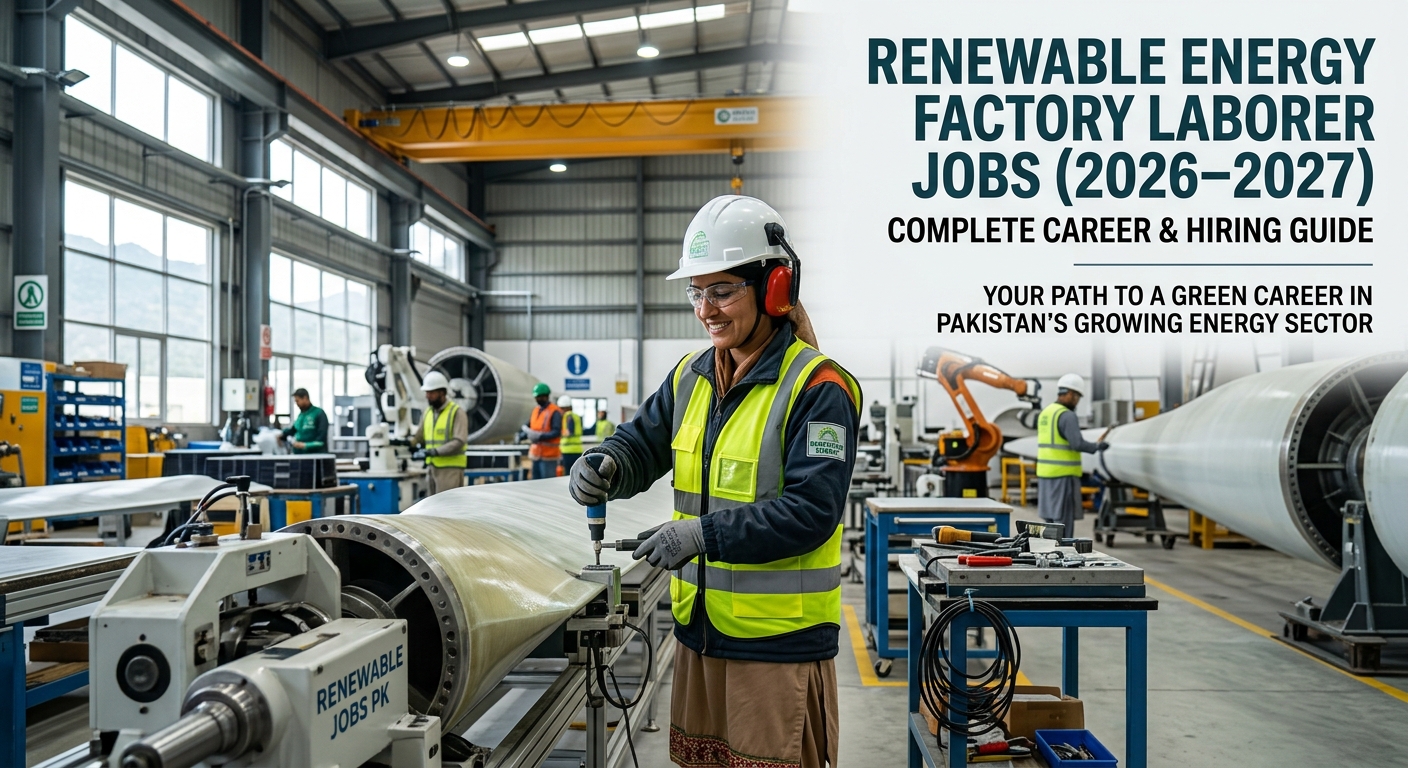
A renewable energy factory laborer works on the production floor or automated assembly line within facilities dedicated to manufacturing clean technologies. Compared to traditional warehouse roles, this position demands higher precision, adherence to stringent safety standards, and specialized manufacturing techniques.
Core Duties and Responsibilities
- Precision Assembly: Assembling photovoltaic (PV) solar modules, wind generator components, or lithium-ion battery packs.
- Automated Equipment Operation: Monitoring and controlling robotic systems, precision soldering equipment, metal stamping machinery, and automated tools.
- Quality Assurance & Testing: Conducting detailed inspections of incoming raw materials and completed products to detect defects prior to shipment.
- Workplace Safety & Equipment Maintenance: Complying with cleanroom standards, safely managing chemical applications, and performing routine tool maintenance.
- Supply & Material Logistics: Transporting essential inputs—such as silicon wafers, fiberglass materials, and heavy electrical wiring—to designated processing stations.
Leading Sectors Hiring Manufacturing Workers (2026–2027)
| Industry Sector | Primary Manufactured Goods | Essential Production Tasks |
| Solar Power | Photovoltaic modules, mounting hardware, power inverters | Cell stringing, glass lamination, aluminum frame mounting, final testing |
| Wind Energy | Rotor blades, generator assemblies, steel tower segments | Fiberglass mold placement, resin infusion, surface polishing, protective coating |
| Battery & Energy Storage | Lithium-ion battery cells, utility-scale storage packs | Cleanroom environmental monitoring, electrode coating, pack integration |
| Green Hydrogen | Industrial electrolyzer stacks, fuel cell systems | Precision membrane positioning, custom sealing, pressure testing |
Key Qualifications and Candidate Requirements
Many entry-level opportunities exist within renewable energy production, making these positions accessible without requiring a formal university degree.
- Educational Background: High school diploma, GED certificate, or equivalent vocational training credentials.
- Physical Capabilities: Stamina to complete 8-to-12-hour operational shifts, capability to lift up to 50 lbs safely, and consistency with repetitive tasks.
- Technical Proficiency: Experience handling hand/power tools, digital control panels, and accurate measuring devices.
- Advantageous Certifications (Optional): OSHA 10/30 safety credentials, Certified Manufacturing Associate (CMfgA) certification, or forklift and basic electrical licenses significantly strengthen applications.
Earnings Potential and Career Advancement (2026–2027)
Salaries for green energy production staff vary according to region, technical skills, and assigned shift patterns:
- Entry-Level Starting Pay: $18.00 – $24.00 per hour
- Experienced Operators & Shift Leads: $25.00 – $32.00 per hour
- Average Annual Base Salary: $38,000 – $58,000 per year (excluding overtime pay and shift premiums)
How to Apply
Ready to launch your career in green technology manufacturing? Click the button below to browse current job openings, review location-specific requirements, and submit your application today.